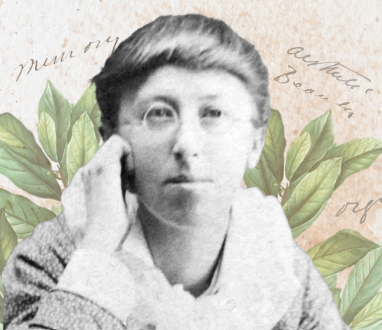
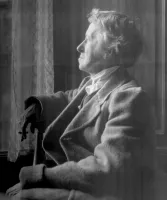
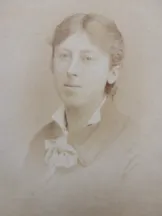
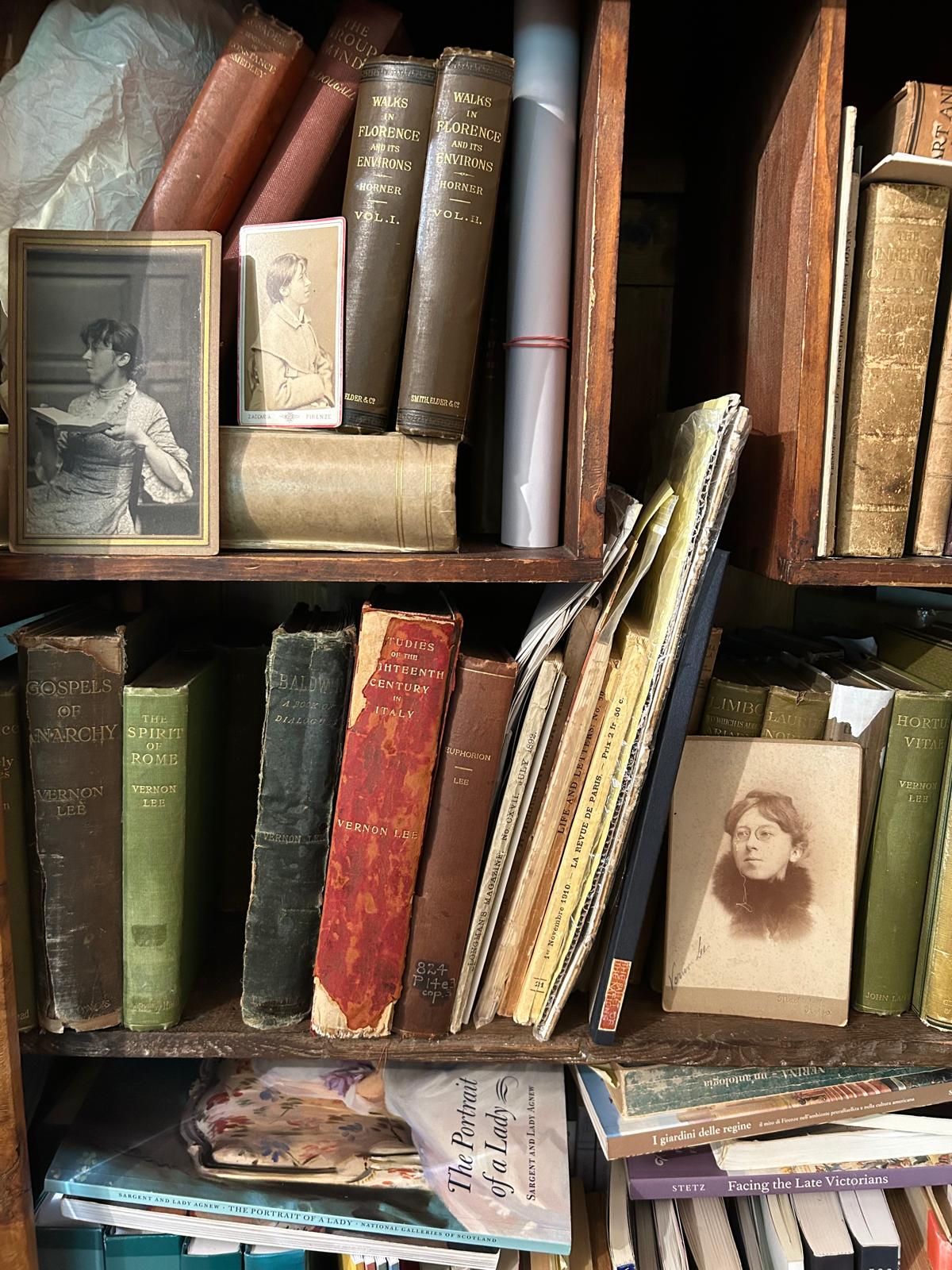
On this day, 90 years ago, Vernon Lee passed away

On this day, February 13, 1935, Vernon Lee’s close friend Mabel Price wrote from 49, Banbury Road, Oxford to her close French friend Berthe Noufflard, 61 rue de Varenne, Paris:

Oxford Feb 13.

it is all over –this morning.
Will you let Mrs Duclaux know
Mbl

The original letter is available at https://eman-archives.org/HoL/items/show/1862

Vernon Lee now Rests in Peace, but her memory and her work live on thanks to the Associazione Culturale Il Palmerino, who keeps Lee’s vibrant heritage alive and develops artistic and cultural activities which she would have loved, and thanks to all the students, scholars and readers, members of a community of kindred spirits around the world.

As this year marks the 90th anniversary of Vernon Lee’s passing, the Associazione Culturale Il Palmerino will go at 10:30 a.m. to the Cimitero degli Allori via senese 180, where she is buried, inviting those who are interested to come and wanting to bring a small excerpt from her essays or stories to read there extemporaneously as a tribute to her memory. For more information, contact associazione@palmerino.it and visit https://www.palmerino.org/

Long Live Lee!

Posted in Announcements, Uncategorized | Tagged , , , | Leave a comment

Extended deadline March 21, 2025 : Vernon Lee et l’héritage culturel européen : Influences réciproques et dialogue intermédial, Paris, 18-19 Septembre 2025

Chères et chers collègues,

La date limite pour envoyer vos propositions de communications au colloque Vernon Lee est repoussée au 21 mars 2025. Vous trouverez ci-après pour rappel l’appel à communications.

Cordialement

Christophe Gelly

Université Clermont Auvergne

Colloque organisé par le Pr. Christophe GELLY (Université Clermont Auvergne) et Emilie Laurent (PhD Université Clermont Auvergne) sous l’égide du LARCA UMR 8225 / CELIS UR 4280

Le colloque se tiendra les 18 et 19 septembre 2025,

Bâtiment Olympe de Gouges 

8 Place Paul-Ricoeur, 75013 Paris

(Scroll down for the English version)

La production artistique de Vernon Lee (1856-1935), autrice et essayiste britannique, cosmopolite et européenne avant l’heure, couvre un très vaste domaine qui s’étend des fictions néo-gothiques aux récits de voyage, en passant par la théorie esthétique, le théâtre et les essais politiques. Cette œuvre instaure un dialogue particulier avec la tradition littéraire passée et contemporaine, qu’il s’agisse de la littérature fantastique (Hauntings, 1890) ou des auteurs du mouvement décadent comme Oscar Wilde, voire des auteurs français (notamment Théophile Gautier avec qui elle partage un intérêt pour les œuvres de l’Antiquité). Mais au-delà de cette dimension intertextuelle, le lecteur est frappé par la part essentielle que joue dans cette œuvre le discours sur l’art dans son ensemble —par exemple dans Belcaro (1881) ou Renaissance Fancies and Studies (1895) — à tel point que certaines nouvelles sont construites en référence directe à des tableaux ou à des pièces musicales spécifiques — comme l’opéra Don Juan dans « The Virgin of the Seven Daggers ». De même, « Amour Dure » réinvente le célèbre portrait de Lucretia Panciatichi, peint par le Bronzino, et « Winthrop’s Adventure » et « A Wicked Voice » sont basés sur le mythe populaire du célèbre castrat Farinelli et sur son portrait, « Il Farinelli » de Corrado Giaquinto. On peut donc se demander dans quelle mesure cette place ménagée aux autres arts dans l’écriture de Lee (sans doute influencée par le retour des études sur la Renaissance, initié par Walter Pater) aboutit à la construction d’une esthétique véritablement intermédiale, qui mêle les procédés narratifs littéraires à une esthétique plus large (picturale et musicale) qui serait évoquée et mise en œuvre dans les textes. Cette présence d’une pluralité d’influences dans les textes se vérifie également à un autre niveau, à savoir dans l’approche mythographique qui fait en partie l’originalité de l’auteure. Vernon Lee se réfère très souvent à un matériau issu de l’Antiquité ou du fonds folklorique pour développer la trame de ses récits. Par exemple, « Prince Alberic and the Snake Lady » réécrit le mythe de Mélusine ainsi que la Lamia de Keats. Ici encore, deux niveaux d’analyse peuvent se rejoindre : comment comprendre cet emprunt aux mythes, et quelles modalités sont-elles mises en œuvre pour intégrer dans le texte littéraire ces récits ou ce fonds mythiques dont les supports (tradition orale, littérature antique) diffèrent le plus souvent du cadre dans lequel ils sont transposés ? Il s’agira donc de poser la question des modalités de ce dialogue entre les arts, de ses motivations (pourquoi Lee choisit-elle de revisiter certains mythes et certaines œuvres du passé ?) et des conséquences de cette relecture sur sa pratique de l’écriture. L’intégration de ces sources intermédiales mettra en évidence chez Lee le désir de réviser une tradition établie de façon personnelle, parfois iconoclaste, afin que ces influences ne résultent pas dans une forme d’angoisse (Harold Bloom) mais dans une créativité renouvelée.

Les pistes suivantes pourront être explorées en lien avec la thématique du dialogue intermédial :

  • Le rapport de la culture victorienne à l’art européen, à travers l’œuvre de Lee
  • Perspectives stylistiques et esthétiques sur l’intermédialité
  • Relecture et adaptation mythographique
  • Vernon Lee et la « fin de siècle », ère de renouveau du discours sur les arts
  • Art britannique et art continental chez Lee
  • La redéfinition des frontières génériques à travers l’intermédialité

Ces pistes d’approche ne sont pas exhaustives. Le colloque se tiendra en anglais et en français.

Merci d’envoyer vos propositions (max. 300 mots) accompagnées d’une courte présentation biobibliographique (max. 150 mots) avant le 1er mars 2025 à cette adresse : vernonleeintermediality@gmail.com. Le comité scientifique fera parvenir sa réponse avant le 1er avril 2025.

Comité scientifique

Christophe Gelly (Université Clermont Auvergne)

Sophie Geoffroy (Université de la Réunion)

Xavier Giudicelli (Université Paris Nanterre)

Emilie Laurent (Université Clermont Auvergne)

Laurent Mellet (Université Toulouse Jean Jaurès)

Michel Prum (Université Paris Cité)

Laurence Roussillon Constancy (Université de Pau et des Pays de l’Adour)

Deux conférenciers invités interviendront lors du colloque :

Pr. Sophie Geoffroy (Université de la Réunion) (sous réserve)

Présidente fondatrice de l’International Vernon Lee Society jusqu’en décembre 2024, elle dirige le journal The Sibyl, A Journal of Vernon Lee Studies. En 2001, elle a traduit plusieurs des récits fantastiques de Lee en français. En 2017, elle a publié Les Femmes et la Pensée Politique : Vernon Lee et les Cercles Radicaux qui regroupe des essais issus de deux colloques internationaux organisés à Paris en octobre 2013 et mars 2015. Ses travaux récents incluent une édition critique de la correspondance de Vernon Lee aux éditions Routledge (Selected Letters of Vernon Lee) en collaboration avec Amanda Gagel. Trois volumes sont déjà parus.

Pr. Catherine Maxwell (Queen Mary University, London, UK)

Le professeur Maxwell est spécialiste de l’esthétisme et du mouvement décadent, et travaille sur les arts visuels, le genre et la sexualité, l’hellénisme et les mythes classiques, ainsi que sur l’influence du Romantisme. Elle est l’auteur de huit articles sur Vernon Lee et des essais suivant : The Female Sublime from Milton to Swinburne : Bearing Blindness (Manchester University Press, 2001), Swinburne (Northcote House/Liverpool University Press, 2006), Second Sight : The Visionary Imagination in Late Victorian Literature (Manchester University Press, 2008), et Scents and Sensibility : Perfume in Victorian Literary Culture (Oxford University Press, 2017), récompensé en 2018 par le prix de la société ESSE (European Society for the Study of English). Avec Patricia Pulham, elle a coédité l’édition Broadview des textes de Vernon Lee intitulée Hauntings and Other Fantastic Tales (2006) et un recueil d’essais, Vernon Lee: Decadence, Ethics, Aesthetics (Palgrave Macmillan, 2006). Avec Stefano Evangelista, elle est l’éditrice de la série MHRA Jewelled Tortoise qui publie des éditions de textes esthétiques et décadents. Son dernier projet est une monographie intitulée « The Flowers of Victorian Poetry: Cultivating the Imagination », sous contrat avec Oxford University Press.

ENGLISH VERSION

Dear colleagues,

The deadline to send your abstracts has been expended to March 21, 2025.

Yours sincerely,

Christophe Gelly

Université Clermont Auvergne

Vernon Lee and the European cultural heritage:  Reciprocal influences and intermedial dialogue

This conference is organised by Pr. Christophe GELLY (Université Clermont Auvergne) and Emilie Laurent (PhD Université Clermont Auvergne) under the aegis of LARCA UMR 8225 / CELIS UR 4280

The conference will take place on 18 & 19 September 2025

Bâtiment Olympe de Gouges

8 Place Paul-Ricoeur, 75013 Paris

The work of Vernon Lee (1856-1935), a cosmopolitan British author and essayist who was precociously European-minded, covers a vast field, from neo-Gothic fiction to travel writing, aesthetic theory, theater and political essays. This work establishes a particular dialogue with past and contemporary literary traditions, whether it be fantasy literature (Hauntings, 1890) or authors of the decadent movement such as Oscar Wilde, or even French authors (notably Théophile Gautier, with whom she shares an interest in the art of Antiquity). But beyond this intertextual dimension, the reader is struck by the essential part played in her production by the discourse on art as a whole — for example in Belcaro (1881) or Renaissance Fancies and Studies (1895) — to such an extent that some short stories are constructed in direct reference to specific paintings or musical pieces, such as the opera Don Giovanni used in “The Virgin of the Seven Daggers.” Similarly, “Amour Dure” reinvents the famous portrait of Lucretia Panciatichi by Bronzino, and “Winthrop’s Adventure” and “A Wicked Voice” are based on the popular myth of the famous castrato Farinelli and his portrait, “Il Farinelli” by Corrado Giaquinto. We may therefore wonder to what extent the place given to other arts in Lee’s writings (no doubt influenced by the return to Renaissance studies initiated by Walter Pater) results in the construction of truly intermedial aesthetics, which blends literary narrative devices with a broader aesthetics (pictorial and musical) that is evoked and implemented in the texts. The presence of a plurality of influences in the texts can also be seen at another level, namely in the mythographic approach that is part of the author’s original voice. Vernon Lee very often refers to material from Antiquity or folklore to develop the framework of her stories. For example, “Prince Alberic and the Snake Lady” rewrites the myth of Melusine and Keats’s Lamia. Here again, two levels of analysis can converge. First, we can examine how this borrowing from myths operates, and what it retains from the original sources. Secondly, we can study how the literary text integrates these mythical tales or traditions, which appear originally in expressive modes (such as oral tradition, or ancient literature) which most often differ from the medium in which they are transposed. The research presented will bear on the modalities of this dialogue between the arts, its motivations (why does Lee choose to revisit certain myths and works from the past?) and the consequences of this rereading on her writing technique. The integration of these intermedial sources be approached as pointing to Lee’s desire to revise an established tradition in a personal, sometimes iconoclastic way, so that these influences do not result in a form of anxiety (after Harold Bloom’s famous phrase) but in renewed creativity.

The following perspectives can be explored in connection with the theme of intermedial dialogue. These suggestions are not exhaustive.

– The relationship between Victorian culture and European art, through Lee’s work

– Stylistic and aesthetic perspectives on intermediality

– Re-reading and mythographic adaptation

– Vernon Lee and the “fin de siècle,” an era of renewal for the discourse on the arts

– British and continental art in Lee’s work

– Redefining generic boundaries through intermediality

Two guest speakers will take part in the conference:

Pr. Sophie Geoffroy (Université de la Réunion) (to be confirmed)

Professor Geoffroy founded the International Vernon Lee Society and served as its President until December 2024; she also edits The Sibyl, A journal of Vernon lee Studies. In 2001, she translated several of Lee’s fantasy stories into French. In 2017, she published Women and Political Theory: Vernon Lee andRadical Circles, which brings together essays from two international colloquia held in Paris in October 2013 and March 2015. Her recent work includes a critical edition of Vernon Lee’s correspondence published by Routledge (Selected Letters of Vernon Lee), in collaboration with Amanda Gagel. Three volumes have already appeared.

Pr. Catherine Maxwell (Queen Mary University, London, UK)

Professor Maxwell has specialist interests in Aestheticism and Decadence, the visual arts, gender and sexuality, Hellenism and classical myth, and the influence of Romanticism. She is the author of  eight published essays on Vernon Lee and of the following studies: The Female Sublime from Milton to Swinburne: Bearing Blindness (Manchester University Press, 2001), Swinburne (Northcote House/Liverpool University Press, 2006), Second Sight: The Visionary Imagination in Late Victorian Literature (Manchester University Press, 2008), and Scents and Sensibility: Perfume in Victorian Literary Culture (Oxford University Press, 2017), awarded the 2018 European Society for the Study of English prize for Literatures in English. With Patricia Pulham, she co-edited the Broadview edition of Vernon Lee’s Hauntings and Other Fantastic Tales (2006) and an essay collection, Vernon Lee: Decadence, Ethics, Aesthetics (Palgrave Macmillan, 2006). With Stefano Evangelista, she is editor of the MHRA Jewelled Tortoise series which publishes editions of Aesthetic and Decadent texts. Her latest project is a monograph titled ‘The Flowers of Victorian Poetry: Cultivating the Imagination’ contracted to Oxford University Press.

Please send your proposals (max. 300 words) and a short biographical note (max. 150 words) by March 1, 2025 to: vernonleeintermediality@gmail.com. Papers can be given in French or in English. The scientific committee will reply by April 1, 2025.

Bibliographie indicative

Evangelista, Stefano. “Vernon Lee and the Aesthetics of Doubt”. British Aestheticism and Ancient Greece, par Stefano Evangelista, Palgrave Macmillan UK, 2009, p. 55‑92. https://doi.org/10.1057/9780230242203_3.

Fraser, Hilary. “Writing Cosmopolis: The Cosmopolitan Aesthetics of Emilia Dilke and Vernon Lee”, 19: Interdisciplinary Studies in the Long Nineteenth Century, vol. 28,  2019. https://doi.org/10.16995/ntn.844

Geoffroy, Sophie. « Images, textes, voix : les modalités de leur co-présence, leurs fonctions respectives, leur interaction dans la création littéraire : le cas de Vernon Lee » Travaux et documents, N° 19, avril 2003, pp. 43-50.

Geoffroy-Menoux, Sophie. « L’esthétique trans-artistique picturo-musico-littéraire de Vernon Lee », Narratologie n°6, « Littérature et représentations artistiques », Fabrice Parisot (ed.), CNA/L’Harmattan, 2005, pp. 121-42.

Kane, Mary Patricia. Spurious Ghosts: The Fantastic Tales of Vernon Lee. Carocci, 2004.

Maxwell, Catherine, et Patricia Pulham (eds.). Vernon Lee: Decadence, Ethics, Aesthetics. Palgrave Macmillan, 2006.

Maxwell, Catherine. “Vernon Lee and the Ghosts of Italy”. Chapman, Alison and Jane Stabler (eds.). Unfolding the South: Nineteenth Century British Women Writers and Artists in Italy 1700-1900. Manchester University Press, 2003, pp. 201-21.

Maxwell, Catherine. “Vernon Lee’s Handling of Words”, Thinking Through Style: Non-Fiction Prose of the Long Nineteenth Century, Michael D. Hurley and Marcus Waithe (eds.), Oxford University Press, 2018, pp. 282-97.

Maxwell, Catherine. “‘Bringing the perfume out of everything’: Vernon Lee, Scent and Memory”, Smell and Social Life: Aspects of English, French and German Literature (1880-1939), Katharina Herold and Frank Krause (eds.). London German Studies 17 (Iudicium, 2021), pp. 178-196

Maxwell, Catherine. « From Dionysus to ‘Dionea’: Vernon Lee’s Portraits ». Word & Image, vol. 13, no 3, juillet 1997, p. 253‑69. https://doi.org/10.1080/02666286.1997.10434288.

Petraschka, Thomas. « “Theirs Is the Future Way of Studying Aesthetics”: Vernon Lee and the German Aesthetics of Empathy ». Empathy’s Role in Understanding Persons, Literature, and Art, par Thomas Petraschka et Christiana Werner, Routledge, 2023, p. 296‑314. https://doi.org/10.4324/9781003333739-19.

Pulham, Patricia. Art and the Transitional Object in Vernon Lee’s Supernatural Tales. Routledge, 2018.

Zorn, Christa. “Aesthetic Intertextuality as Cultural Critique: Vernon Lee Rewrites History Through Walter Pater’s ‘La Gioconda’”. The Victorian Newsletter, vol. 91, printemps 1997, 4-11. https://www.wku.edu/victorian/documents/pdf-files/spring_1997.pdf

Posted in Announcements, Conferences | Tagged , , | Leave a comment

Bonne année! Greetings! Tanti auguri!

Posted in Uncategorized | Leave a comment

CFP: Vernon Lee in America: Text, Application, and Practice (Proposal Deadline: January 3, 2025)

Vernon Lee in America: Text, Application, and Practice 
Colorado College
Colorado Springs, CO, USA 
June 29 – July 2, 2025 

Posted by NAVSAon Dec 13, 2024

Proposal Deadline: January 3, 2025

Vernon Lee in America: Text, Application, and Practice seeks papers or workshops on a wide range of topics that showcase how her ideas can be studied or applied not only in scholarly works but also in practical applications. The aim of this conference is to gather interest and participation in the expansion of Vernon Lee studies in North America. Of particular interest, this interdisciplinary conference hopes to explore how we might look to Lee’s ideas and theories as methods and practices for engaging in our contemporary world. For example, Harry Francis Mallgrave, an architectural theorist writes that Lee and Kit Anstruther-Thomson’s “Beauty and Ugliness” anticipated our embodied responses to buildings and the built environment. Simon Reader’s Notework examines the compiling methods of Lee and other nineteenth-century authors as a response to burgeoning systems of organizing knowledge. Lee’s work on empathy and psychological aesthetics anticipates the discovery of mirror neurons in the field of neuroscience, and scholars are currently writing about her ideas as they apply to artificial intelligence and the experience of art. These are only a few of the ways Lee’s works have been applied to interdisciplinary fields. The conference organizers are eager to see an expansion of how her works might apply in fields such as:  

  • Music and musicology 
  • The intersections between science and literature 
  • Psychological aesthetics 
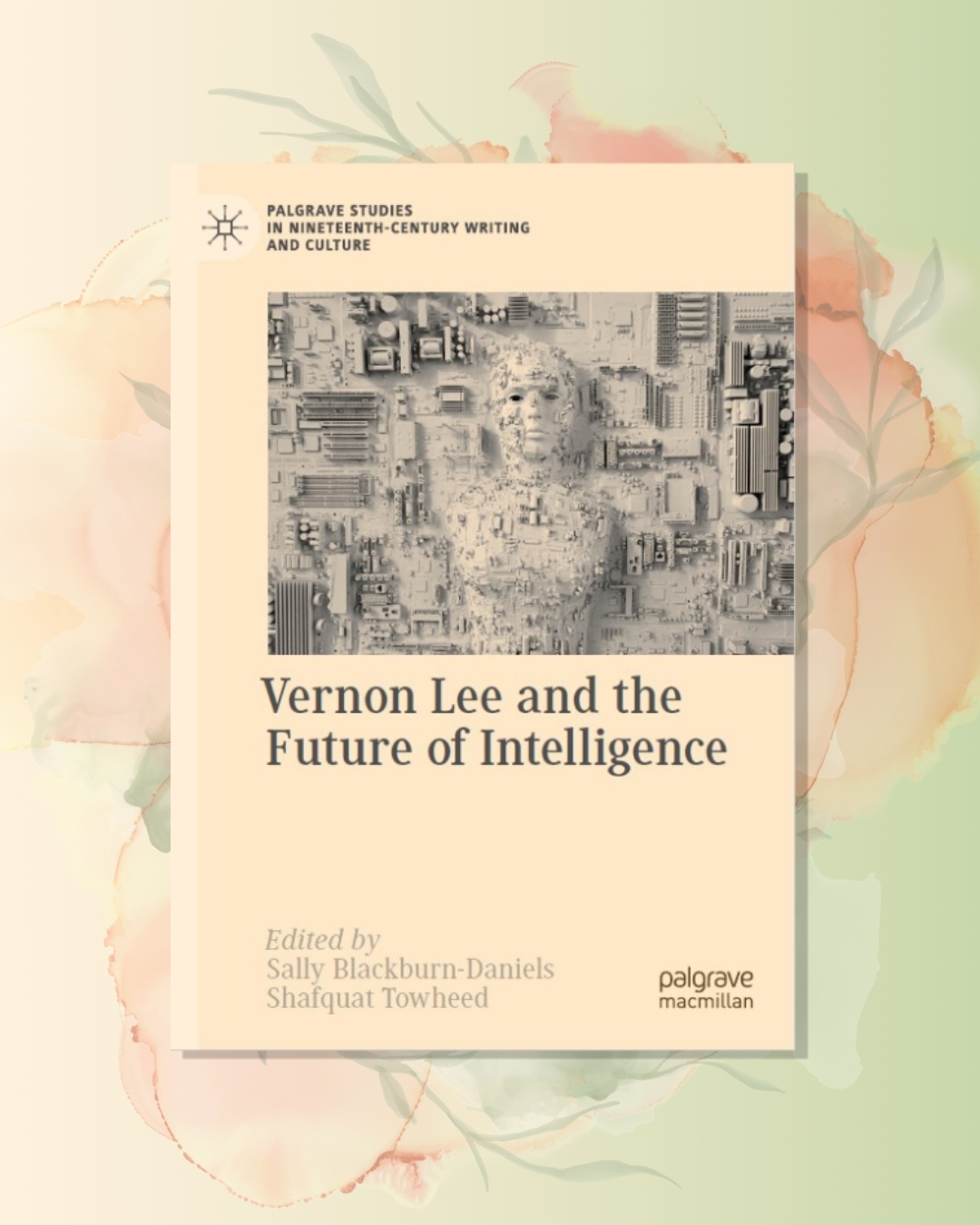
  • Intelligence and Artificial Intelligence 
  • Creative practice 
  • Performance 
  • Authorship, publishing, and reading studies 
  • Digital Humanities 

Vernon Lee in America: Text, Application, and Practice will be an in-person, three-day conference, open to academics, independent scholars, and aficionados of Lee and her circle at all stages of their careers. There is a continually growing interest in Lee’s works in North America, and one of the objectives of this conference is to hear and discover the many and varied research and ideas that scholars are pursuing, and to forge networks and collaborations. At this conference, we encourage speakers to present current research on Lee from any discipline.

We welcome individual paper presentations, round table discussions in any of the following formats: 

  • Individual paper (20 minutes speaking time/2500 words) 
  • Individual lightning talk (7 minutes speaking time/1000 words) 
  • Round table panel, up to 5 participants (40 minutes speaking time in total) 
  • Creative writing responses or creative/critical responses to conference themes (20 minutes speaking time/2500 words) 
  • Practice-based workshop or performance (40 minutes)

If you would like to propose an individual paper, panel, or workshop to present at the conference, please submit a 300-word abstract and a brief biography (50 words) to the conference organizers at VLinAmerica2025@gmail.com by Friday, January 3, 2025. 

Conference Committee :
Tomi-Ann Roberts, Professor of Psychology, Colorado College 
Mary Clai Jones, Associate Professor of English and Humanities, Chadron State College
Mary F. Burns, Independent Scholar and Novelist 
Sally Blackburn-Daniels, Research Fellow, Teesside University

Posted in Uncategorized | Leave a comment

Dedication: Unfurling Vernon Lee’s Kinship Networks, Online 16 & 17 October 2024

Dear readers and friends of Vernon Lee,

We look forward to seeing you next week!

To register for the conference, please use the link: https://www.eventbrite.com/e/dedication-unfurling-vernon-lees-kinship-networks-tickets-990567924327

With all our best wishes,

Frankie, Sally, Lucinda, and Suzy

Posted in Uncategorized | Tagged , , , , , , , , , | Leave a comment

Dedication: Unfurling Vernon Lee’s Kinship Networks -16 & 17 October 2024

We are delighted to announce that registration is now OPEN through eventbrite at this link: https://www.eventbrite.com/e/dedication-unfurling-vernon-lees-kinship-networks-tickets-990567924327

Looking forward to seeing you there, to celebrate Vernon Lee’s birthday together for the 11th time since the IVLS was created!

The event is organized by Frankie Dytor (University of Exeter), Lucinda Janson (QMUL), Suzy Corrigan (Teesside University) and Sally Blackburn-Daniels (Teesside University) as part of the annual series of events hosted by the International Vernon Lee Society. It is kindly sponsored by Teesside University, Queen Mary University, and the University of Exeter.

Posted in Announcements, Conferences, IVLS, Seminars, Lectures, Study Days, Uncategorized | Tagged , , , , , , , , | Leave a comment

Vernon Lee, Queer Musicology and a Book review

Review of Kristin M. Franseen,

Imagining Musical Pasts: The Queer Literary Musicology of Vernon Lee, Rosa Newmarch, and Edward Prime-Stevenson , Liverpool: Liverpool University Press & Clemson University Press, 2023. ISBN 9781638040583. eISBN 9781638040590. 280 pages

The book is organized in three parts of two chapters each, mini-monographs really, offering comparative analyses between the three chosen authors, and completed by very interesting appendices (Vernon Lee’s English Questionnaire, Edward Prime-Stevenson’s annotations and “Literary Agent’s Press-Circular” and list of Dedicatees in Long-Haired Iopas), various Tables like that of musical references in Rosa Newmarch’s poetry, beautiful illustrations, endnotes, an index, but no List of References. In her substantial Acknowledgements section, Kristen Franseen was too shy to mention the Prize she was awarded by the Scientific Committee of the International Vernon Lee Society in 2018 for her essay “Ghosts in the Archives: Queerness and Ambiguity in Vernon Lee’s Castrato Scholarship”.

Though this book is “not a biography of its three central subjects”, Franseen studies private moments and public (or semi-public) scholarship, framing them in their respective contexts, and comparing the interdisciplinary music research of Vernon Lee, Rosa Newmarch and Edward Prime-Stevenson — who knew one another and whose networks intersected–, arguing that their research can be seen not so much as “music criticism” but as musicologists’ artistic creative acts –musicology being defined as a form of literature produced by human beings. And this angle accounts for an immensely readable book, full of illuminating analyses, like that of the role of the phonograph in bringing together “a sort of imagined –if geographically dispersed—musical community” as well as allowing “artists new ways to produce ‘ghostly’ encounters and scientists new ways to attempt to record paranormal phenomena.”

Part I studies Vernon Lee’s efforts to fully capture the “ghosts” of deceased performers, her fantasied experiences of eighteenth-century opera, and “the place of memory and identity in her music perception research”. “Part II considers Rosa Newmarch in the mold of the Holmesian detective, sorting through documentary evidence to reveal some (but pointedly not all) of her subject’s secrets while remaining essentially outside of the mystery at hand. Part III outlines Prime-Stevenson’s layering of identities and nostalgic use of repetition, revision, and dedication to rewrite his real and imagined musical selves and ‘return’ to various possible musical pasts (while hinting at additional potential futures).”

Vernon Lee’s fascination for 18th castrati and abhorrence for the sensuality of Wagnerian opera and its adherents is delved into, illuminated and confirmed by Newmarch’s Tchaikovsky research and Edward Prime-Stevenson’s autobiographical music criticism.

Franseen analyses the obsessive pattern at the core of Vernon Lee’s “Ghostly Musical Encounters” with Castrati from the Eighteenth Century and even in her last book Music and its Lovers: An Empirical Study of Emotional and Imaginative Responses to Music  –“an eclectic blend of music perception studies, aesthetics, and self-reflection on how and why people discern meaning from different types of art music”—overhearing and “the anxiety of mishearing”: “What if it “should turn out hideous?”  In other words, “her writings on beauty and emotion emphasize the sense of the present not as resulting naturally from certain events in the past, … but as continually haunted by its repercussions and resonances ….”

Like Vernon Lee, Rosa Newmarch lays emphasis on the listener’s experience, “draw[ing] from psychological theory of emotional responses to the visual arts” (95) and experiences “the struggles of musicology with biography as a source of insight into the past” (80) in her work about Tchaikovsky after his death in 1893, rumours (homosexuality, suicide, melancholy music, etc). Similarly, Franseen struggles through Newmarch’s “rhetoric of secrecy, subjectivity & ambiguity”. While “little is known of her marriage to Henry Charles ‘Harry’ Newmarch”, Rosa “encountered many women known for romantic friendships: Vernon Lee, Ethel Smyth, Mary Wakefield; and argues that “Symphonic listening” provided a “space for women’s homosocial or homoerotic relationships” (104), which Newmarch explored with  Bella Simpson.

According to us, the best part remains Franseen’s study of Edward Prime-Stevenson’s The Intersexes and of his musical anthology Long-Haired Iopas, seen as an “attempt to establish a queer artistic canon” and a community. Both books were published under the pseudonym “Xavier Mayne”, and are sadly omitted by existing scholarship, even in Literature and LGBTQ studies. Characterized by “eccentricity and self-reference”, Prime Stevenson aka Mayne posed as an authority in music criticism & sexology though without any training in either field. In the chapter “Queering the Canon: musicality, biography and listening in The Intersexes” Franseen shows how EPS draws from personal experience (like Lee in her Music and its lovers) and “tries to create musical-sexual knowledge” (like Newmarch in her Tchaikovsky research). She analyses how “Mayne” explains “the secret message hidden in mainstream works” (131), “suggests alternative narratives of Beethoven’s unhappy relationships with women” and unveils “the ‘real story’ of Wagner, Ludwig II, and Parsifal.” (141) Indeed, Mayne describes Wagner as an aphrodisiac for “uranians” esp. Tristan & Isolde, writing that“The Bayreuth Wagner Festivals represent a kind of homosexual forcing-house …. Wagner himself chose a covertly homosexual subject for his ripest & most sensuous music-drama, Parsifal.” (EPS quoted on p. 141) Profoundly misogynistic, Parsifal, he writes, is “a continuous insult to woman as a sex” (Mayne, quoted on p. 144).

Prime Stevenon’s analyses of  “the sexual appeal, the neurotic spell of Wagner” (EPS quoted on p. 151 note 66) splendidly confirm Vernon Lee’s Wagner criticism. True enough, “The inclusion of such meaning-laden works as the transformation scene from Parsifal and the Liebestod from Tristan und Isolde take on possible queer meaning in light of Edward Prime Stevenson’s writings on sexuality and knowledge of Wagner’s popularity among German sexologists.” (166)

Indeed, as Philip Brett writes, “Much academic musicology and music criticism increasingly attempted to exclude women themselves along with the feminine.” (145; Philip Brett note 48). No wonder Ethel Smyth encountered such difficulties in establishing herself as a composer…

“Who knows?”, Franseen invitingly wonders. “Perhaps a future incarnation of this research could be in the form of a mystery novel. I can easily picture Rosa Newmarch untangling a complex paper trail or Vernon Lee and Edward Prime-Stevenson stumbling across some intrigue while arguing about opera in a glamorous Italian resort.” What an interesting suggestion to Mary F. Burns for her Paget-Sargent detective series!

We also invite our readers to read Fraser Riddell’s book, from his 2018 Doctoral thesis:  Music and the Queer Body in English Literature at the Fin de Siècle , DOI: https://doi.org/10.1017/9781108989541? Cambridge University Press, 2022.

Other work about Queer musicology includes Frankie Dytor’s article: “Thanking, and Begging, Her for Music”: Ethel Smyth, Vernon Lee and Queer Musical Community in the British Music Collection.” https://britishmusiccollection.org.uk/article/thanking-and-begging-her-music-ethel-smyth-vernon-lee-and-queer-musical-community-british

Posted in Announcements, IVLS, Research ressources, Uncategorized | Tagged , , , , , , , , , , , , , , , | Leave a comment

Vernon Lee, Santi e Diavoli. Tre racconti italiani

Vernon Lee, Santi e Diavoli. Tre racconti italiani, traduzione di Elena Tregnaghi, collana a cura di Giorgio Leonardi, pp. 124, CSA Editrice, Castellana Grotte 2023.

Il libro raccoglie tre storie in cui emerge tutta la maestria di Vernon Lee nel ricreare atmosfere tra il grottesco e il meraviglioso. Due racconti totalmente inediti e uno dimenticato da oltre un secolo e mai più ristampato: un papa, un asceta e una suora in odore di santità si scontrano con l’eterno nemico, il demonio. “Suor Benvenuta e il Bambin Gesù”, “Papa Giacinto” e “Sant’Eudemone e il suo albero di arancio” sono tre narrazioni perfette, stilisticamente preziose sullo, sfondo di un’Italia intrisa di una religiosità arcaica.

“Suor Benvenuta e il Bambin Gesù” (1905, apparso in precedenza non in italiano ma in veneziano nel 1910 all’interno del periodico Nuova antologia di lettere, scienze ed arti)

“Papa Giacinto”, costituente “una sezione del Codex Eburneus della soppressa Abbazia di Nonantola”

“Sant’Eudemone e il suo albero di arancio”

Vedere la recensione dettagliata di Franco Prezzini, “Una legenda Aurea del cuore”, https://www.carmillaonline.com/tag/vernon-lee/

Grazie a Giorgio Leonardi e Elena Tregnaghi, e buona lettura a tutti!

Posted in Announcements, Uncategorized | Tagged , | 2 Comments

Revues en lutte : les sciences sociales contre l’extrême droite

Chers lecteurs et lectrices,

Nous vous invitons également à prendre connaissance de la Tribune des Historiennes et historiens dans « Le Monde » d’un collectif de plus d’un millier d’universitaires et de chercheurs d’horizons politiques différents, dont Patrick Boucheron, Antoine Lilti, Pierre Nora, Mona Ozouf et Michelle Perrot, appelle la France à ne pas tourner le dos à son passé et à faire battre le Rassemblement national au second tour. (Collectif | Publié le 01/07/2024) Législatives 2024 : « Nous, historiennes et historiens, ne nous résignons pas à une nouvelle défaite, celle des valeurs qui, depuis 1789, fondent le pacte politique français »

De même, France Universités, la Conférence des directeurs des écoles françaises de management (CDEFM), la Conférence des directeurs des écoles d’ingénieurs (Cdefi) et la Conférence des grandes écoles (CGE) disent non au rassemblement national pour les universités et les écoles: https://franceuniversites.fr/actualite/france-universites-la-cdefm-la-cdefi-et-la-cge-disent-non-au-rassemblement-national-pour-les-universites-et-les-ecoles/

De même encore, le Collège des Sociétés savantes “réaffirme l’universalité des valeurs d’ouverture du monde académique, l’importance du respect des liberté académiques et de chercher dans le respect des règles d’intégrité. Le conseil forme le vœu que les citoyennes et les citoyens prennent en compte l’importance du respect de ces valeurs et libertés au moment d’exprimer leur vote.” https://societes-savantes.fr/communique-elections-legislatives-2024-1/

Dear readers,

In this grave hour, facing the extreme right which is now at the gates of power in France, and like Vernon Lee who never gave up her freedom of thought and expression in the face of fascism, Nazism, anti-Semitism, hatred of the other and nationalism, of which she witnessed the deadly rise in all the countries of Europe and which led, as she brilliantly analyzes, to the war, The Sibyl, A Journal of Vernon Lee Studies joins the collective Revue en lutte’s solemn appeal (see below) to prevent the coming to power of the far right at all costs.

Cari lettori e lettrici

In quest’ora grave, di fronte all’estrema destra che è ormai alle porte del potere in Francia, e come Vernon Lee che non ha mai rinunciato alla sua libertà di pensiero e di espressione di fronte al fascismo, al nazismo, all’antisemitismo all’odio dell’altro in tutte le sue forme e ai nazionalismi, di cui fu testimone dell’ascesa mortifera in tutti i paesi d’Europa e che condussero, come lei l’analizza brillantemente, alla guerra, The Sibyl, A Journal of Vernon Lee Studies si unisce all’appello solenne del collettivo Revues en lutte (qui sotto) per impedire ad ogni costo l’arrivo al potere dell’estrema destra.

Revues en lutte : les sciences sociales contre l’extrême droite

“Face à l’urgence de la situation politique, le collectif des revues en lutte appelle à se mobiliser pour empêcher à tout prix l’arrivée au pouvoir de l’extrême-droite.

La décision du Président de la République de dissoudre l’Assemblée nationale ouvre un risque historique de voir l’extrême droite arriver au pouvoir, conduisant le pays au bord du gouffre. Dans cette situation dramatique, nous, revues de sciences sociales, ne pouvons pas rester sans réagir, ni nous exprimer.

Le Rassemblement national n’est pas une formation politique de l’arc démocratique. Dans de nombreuses circonstances, l’extrême droite a témoigné de son hostilité pour les sciences sociales, de son mépris pour les personnels qui contribuent à produire une connaissance critique sur les sociétés et de ses engagements à contraindre les libertés académiques. Comme le documentent de nombreuses enquêtes, lorsqu’elle arrive au pouvoir, l’extrême droite réduit les libertés publiques et s’attaque violemment aux droits des minorités (femmes, minorités de genre et sexuelles, immigré·es et minorités racisées, personnes handicapées, etc.). Elle s’attaque également à la recherche en sciences sociales et à celles et ceux qui la produisent, afin de censurer les connaissances scientifiques. Les valeurs, objectifs et méthodes défendues par et dans nos revues sont incompatibles avec les pratiques et avec la vision de la société que porte le RN. Nous refusons la perspective d’une mise au pas de nos recherches, d’une caporalisation des sciences sociales et d’une censure contre les pensées critiques qui ne manqueraient pas de se produire avec un ministère de l’Enseignement supérieur et de la recherche d’un gouvernement RN. Dans une économie de la connaissance qui ne cesse de se paupériser, c’est notre existence même en tant que revues pluralistes qui est menacée. Nous nous joignons aux appels aux personnels de l’Enseignement Supérieur et de la Recherche à se mobiliser contre l’extrême droite et à empêcher qu’elle accède au pouvoir. Nous appelons à nous rassembler autour du programme du Nouveau Front populaire qui porte des valeurs de liberté intellectuelle et scientifique auxquelles nous croyons fermement.

Les 86 revues signataires : Sociétés contemporaines, Esprit critique, Cahiers d’histoire. Revue d’histoire critique, Journal des anthropologues, Genèses. Sciences sociales et histoire, Sociologies pratiques, Trema, Nuevo Mundo Mundos Nuevos, Politique africaine, Tumultes, TV/Series, Biens symboliques / Symbolic Goods, Cambouis, la revue des sciences sociales aux mains sales ! Urbanités, Brésil(s). Sciences humaines et sociales, Salariat. Revue de sciences sociales, Le Temps des Médias. Revue d’histoire, Transposition, musique et sciences sociales, Communications, Filigrane. Musique, Sons, Esthétique, Société, South Asia Multidisciplinary Academic Journal (SAMAJ), Cahiers de littérature orale, Politix. Revue des sciences sociales du politique, La vie des idées, Langage et Société, Lectures Anthropologiques, Gouvernement et action publique (GAP), Communication & langages, STAPS, GLAD! Revue sur le langage, le genre, les sexualités, BMS. Bulletin de méthodologie sociologique/Bulletin of sociological methodology, Genre & Histoire, Genre, Sexualité & Société, Tracés, Monde commun: des anthropologues dans la cité, Alter, Revue européenne de recherche sur le handicap/ European, Journal of Disability Research, Anthropologie & Santé, Politiques de communication, Clio. Femmes, Genre, Histoire, RESET – Recherches en sciences sociales sur internet, Mouvements, French Cultural Studies, Revue www.ethnographiques.org, Esclavages & Post- esclavages, Revue d’histoire du XIXe siècle, Poli-Politiques des Cultural Studies, Raisons politiques, Participations, Métropoles, Projets de paysage, Glottopol, Actes de la recherche en sciences sociales, Laboratoire italien. Politique et société, Travail, genre et sociétés, Cahiers du genre, Cahiers des Amériques latines, Espaces et sociétés, Histoire de l’éducation, Cahiers François Viète, L’Homme. Revue française d’anthropologie, Nouvelles Questions Féministes, Justice Spatiale | Spatial Justice, Critique internationale, Journal de la Société des américanistes, Lien social et Politiques, Mondes arabes. Revue de sciences sociales du politique des mondes arabes et musulmans, Revue française de civilisation britannique, Recherches en didactique des langues et des cultures, Multitudes, Les Cahiers d’histoire du Cnam, Sensibilités. Histoire, critique & Sciences sociales, Mots. Les langages du politique, Revue de la régulation. Capitalisme, Institutions, Pouvoirs, Champ Pénal / Penal Field, Revue des mondes musulmans et de la Méditerranée, Histoire, médecine et santé, Sociologie du travail, Bulletins et Mémoires de la Société d’Anthropologie de Paris (BMSAP), terrains & travaux, Humanités numériques, Sociologie, Semen. Revue de sémio-linguistique des textes et discours, Revue Français de Socio-Économie, Images Re-vues, exPosition, Frontière·s. Revue d’archéologie, histoire & histoire de l’art

Posted in Uncategorized | Tagged , , | Leave a comment

“Empêcher la France de se jeter dans l’abîme.” Vernon Lee, 1921.

Depuis le 9 juin 2024, tous, femmes et hommes de progrès, attachés aux valeurs que défendait et incarnait Vernon Lee: la culture y compris populaire, l’ouverture aux autres, la fraternité entre les humains et entre les peuples, les droits des femmes, l’égalité, la liberté dans le cadre d’une Loi garante de la justice sociale, et même les droits de la nature–, nous retenons notre souffle.

Vernon Lee, tout au long de sa vie, et jusqu’à sa mort en 1935, oeuvra par ses déclarations, par ses lettres aux éditeurs, par sa correspondance, par ses textes littéraires ou philosophiques, en faveur de la défense de ce qu’elle appelait l’Intelligence. Une Intelligence qu’elle s’attache à définir dans un livre visionnaire, dont le centenaire sera célébré dans 1 an: PROTEUS, or The Future of Intelligence, publié en 1925.

The habit of taking “otherness ” into account, and a wider and wider circle thereof, might serve as a rough test of Intelligence and of its progress (Vernon Lee, Proteus)

Sa vie même, mobile, cosmopolite, riche par les amitiés internationales qu’elle cultiva au-delà des frontières y compris en temps de guerre, reste un modèle et une source d’inspiration. Dès 1921, elle s’inquiétait de la montée des extrêmes-droites et de l’antisémitisme partout en Europe, dont elle voyait que cela ne pouvait conduire qu’au chaos. Elle demande ainsi à son amie Mathilde Hecht: “N’y a-t-il pas en France un parti de gens raisonnables … pour empêcher la France de se jeter dans l’abîme ?” (Vernon Lee, lettre à Mathilde Hecht, Florence, 7 février 1921).

Vernon Lee oppose la stratégie de la peur, qui soumet, à l’Intelligence, qui émancipe. C’est ce qu’ont bien compris les dirigeants de ce monde. “the Rulers of Men have by this time mostly recognized that Intelligence is harder to deal with than any number of High Principles, for you cannot hope to bamboozle it into serving you unawares.”

For Intelligence, one of whose virtues is abolishing Fear, is itself stifled by the obsession of danger in this world or the next: are we not seeing the most naturally intelligent of all countries (France) fallen into incredible self-defeating stupidity through its present mania for “Security”? (Proteus)

Choquée par la montée de l’antisémitisme en France, elle soutient les dreyfusards et rappellera souvent l’affaire Dreyfus dans ses lettres à certains amis tentés par la bascule vers l’extrême droite.

l’obsession de sécurité qui me semble apporter dans la politique de votre pays (du moins celle que vos gouvernants et vos journaux nous la font connaître) des procédés et des attitudes propres au contraire à compromettre cette sécurité même et à préparer pour la France et la civilisation et la liberté de l’Europe entière des dangers beaucoup pires que ceux auxquels tous nous avons non pas échappé mais déjà été immolés, car tous nous sommes des vaincus dans ce qui importe le plus, la sécurité spirituelle autant que matérielle, la vie de progrès (Vernon Lee, lettre à Berthe Noufflard, Londres, 26 Juillet XXV https://eman-archives.org/HoL/admin/items/show/9)

A l’opposé, elle reprend courage grâce à la lecture de Jean-Christophe de Romain Rolland, à qui elle dédie The Ballet of the Nations, et pour lequel elle mène la campagne en vue de l’attribution du Prix Nobel de Littérature parce que l’amitié y est un ciment capable de résister à la haine. Comme il l’écrit en 1916:

“Dans l’abîme de misères où l’Europe s’enfonce, ceux qui tiennent une plume devraient se faire scrupule de ne jamais apporter une souffrance de plus à l’amas de souffrances, ou de nouvelles raisons de haïr au fleuve brûlant de haine.” (Romain Rolland, 1916)

Contre le nazisme, Vernon Lee lit et relit Faust dans le texte et en recommande la lecture à ses amis car … Hitler déteste Goethe, et la culture est une des manières de lutter contre le nazisme. En Italie, elle lutte contre le fascisme, soutient Gaetano Salvemini et diffuse son journal, NON MOLLARE, non sans risques.

“J’apprends que les journaux anglais, à commencer par le Times, se sont mis en émoi pour Salvemini. Je vais voir la femme de Trevelyan qui me dira s’il existe déjà une traduction anglaise du numéro de Non Mollare ou s’il est utile que j’en fasse une : elle gagnera pour avoir lu celle de M. Noufflard. Dans tous les cas cette traduction française m’a donné une espèce de joie qu’on ne connaît plus depuis l’affaire Dreyfus.” (Vernon Lee, lettre à Berthe Noufflard, Londres, 4 juillet 1925).

Suivons son exemple: résistons à la peur, à la xénophobie, à l’intolérance, à la violence!

Posted in Uncategorized | Leave a comment